
Stamped vs. Stained Concrete: Which Is Right for Your Home?
Stamped and stained concrete are the two most popular ways to make concrete look like something more expensive — but they are completely different processes that solve different problems. Stamped concrete is about texture and shape; stained concrete is about color. Choosing the right one comes down to whether you're pouring new concrete or upgrading what you already have, the look you want, and your budget.
This guide compares the two head to head so you can decide with confidence. If you'd rather see physical samples in your own light, call (510) 822-7170 and we'll bring them to your free estimate.
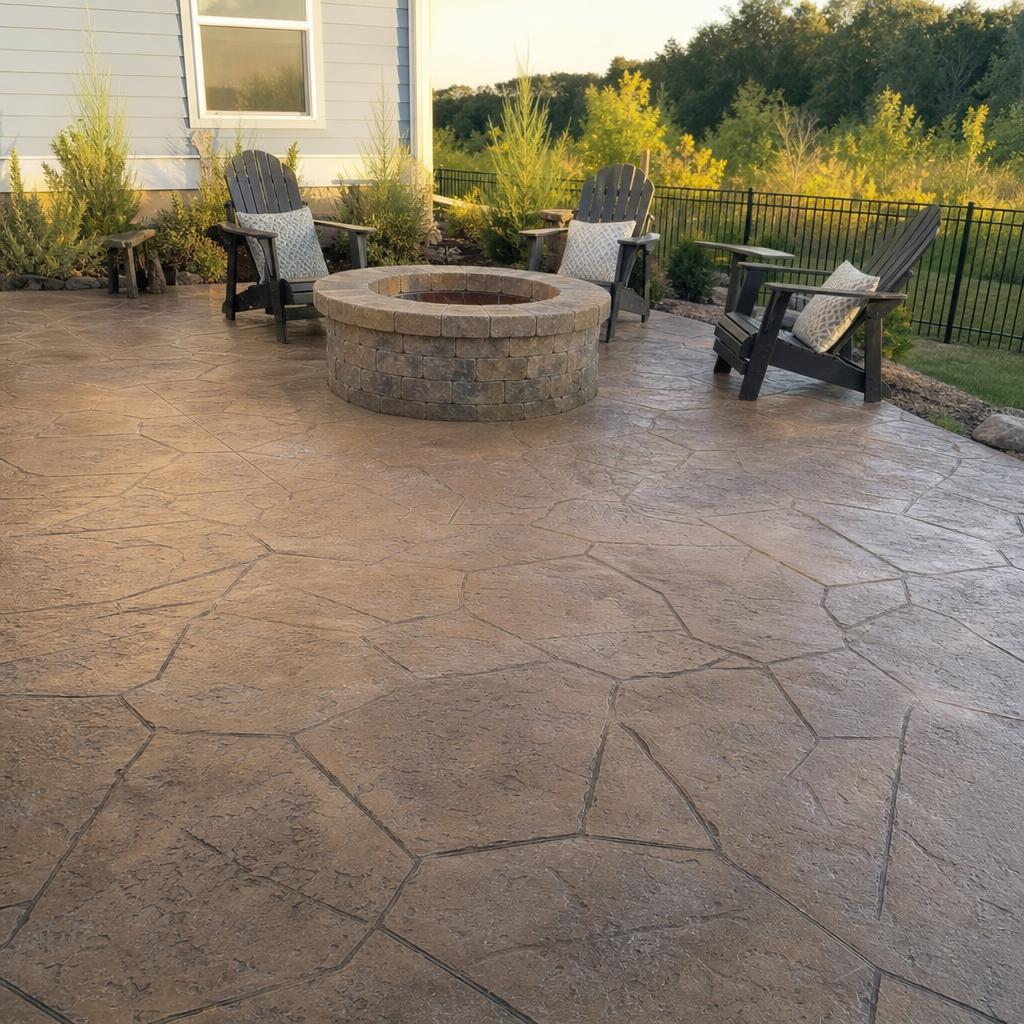
Stamped Concrete: Texture and Shape
Stamped concrete is fresh concrete that's imprinted with textured mats while it's still workable, creating the look of stone, slate, brick, cobblestone, or wood plank. Color is added with the mix and with release agents during stamping, producing rich, layered tones and realistic texture underfoot.
The process
We pour the slab, add color, then press pattern mats into the surface at exactly the right moment in the cure. The result is sealed to protect the color and pattern. Because the texture is formed into the concrete itself, stamped surfaces have real depth — you feel the grout lines and the stone texture, not just see them.
Best uses
Patios, entryways, pool decks, and driveways where you want a high-end, three-dimensional look. Stamped concrete shines when it's the visual centerpiece of an outdoor space. Pair it with colored concrete for integral color that runs all the way through the slab.
Planning a concrete project in Alameda or the East Bay? Get a free, no-obligation on-site estimate and a written flat-rate price.
Stained Concrete: Color and Character
Stained concrete adds color to concrete that already exists — or to a freshly cured smooth slab. Acid stains react chemically with the concrete to create mottled, translucent, stone-like color with natural variation, while water-based stains offer a wider, more predictable palette. Either way, the surface stays smooth; only the color changes.
The process
We clean and prep the existing surface, apply the stain, neutralize and rinse (for acid stains), then seal. Because there's no new pour, staining is often the fastest and most affordable way to transform tired concrete — a gray patio or garage floor becomes a rich, finished surface in a couple of days.
Best uses
Refreshing existing patios, walkways, garage and interior concrete floors, and slabs that are structurally sound but visually dull. Staining is the go-to when the concrete is fine and you just want it to look far better.
Stamped vs. Stained: Side by Side
Here's how the two compare on the factors that matter most.
| Factor | Stamped Concrete | Stained Concrete |
|---|---|---|
| What it changes | Texture, pattern, and color | Color only (surface stays smooth) |
| New or existing | Requires a fresh pour | Works on existing or new concrete |
| Look | 3D stone, slate, brick, wood | Mottled, translucent color |
| Cost (installed) | $18–$32 per sq ft | $8–$20 per sq ft |
| Durability | Very durable; reseal periodically | Durable; color is in the surface, reseal to protect |
| Best for | New patios, driveways, pool decks | Refreshing existing slabs and floors |
The single biggest deciding factor is usually simple: are you pouring new concrete or upgrading existing concrete? New pour with a premium look leans stamped; existing slab that needs new life leans stained. Not sure which fits your space and budget? Call (510) 822-7170.
Cost and Durability in the East Bay
Stamped concrete runs $18 to $32 per square foot installed because every square foot is colored, textured, and sealed by hand. Stained concrete runs $8 to $20 because it usually builds on concrete you already have. Both are estimates — access, prep, and design complexity move the final number, which we set with a free on-site estimate.
Durability-wise, both hold up well in our climate. The East Bay has negligible freeze-thaw, so the main concern is UV and moisture on the sealer. Reseal a stamped patio every few years and it keeps its color and pattern for decades. Reseal a stained floor and the color stays rich. The key with both is a quality initial seal and periodic maintenance — especially near the shoreline, where salt air is harder on finishes.
Maintenance and Longevity
Both finishes are low-maintenance, but a little care goes a long way — and the routine is slightly different for each.
Caring for stamped concrete
The pattern and color are protected by the sealer, so resealing every two to three years is the main task. Reapplying sealer restores the color depth and keeps water out of the textured grout lines. Sweep off debris and rinse periodically, and avoid harsh de-icing chemicals — not that our climate calls for them. Because the East Bay has essentially no freeze-thaw, a well-sealed stamped patio holds its look for decades.
Caring for stained concrete
Stained surfaces also rely on a good sealer to protect the color, especially on floors that see foot traffic. A fresh coat of sealer every couple of years keeps acid-stained color rich and translucent. For interior floors, a periodic buff and reseal keeps the surface looking new. On exterior stained concrete near the shoreline, resealing also guards against salt-air moisture working into the surface.
The common thread: neither finish is fussy, but both reward a simple resealing habit. Skip sealing for years and the color dulls and the surface becomes more vulnerable; keep up with it and the finish outlasts most other decorative surfaces. We'll recommend the right sealer and reseal schedule for your specific project.
Which Should You Choose?
Choose stamped if you're building a new patio, driveway, or pool deck and want a high-end, textured stone or brick look that becomes the centerpiece of the space. Choose stained if you have existing concrete that's structurally sound but visually tired and you want a fast, affordable transformation with rich color. And if you're pouring new and want color throughout rather than just a surface look, ask about colored concrete, which can be combined with either finish.
There's no universally ‘better’ option — only the one that fits your slab, your look, and your budget. Alameda Elite Concrete Solutions installs all three finishes across the East Bay and will show you samples in person so you can see the difference before you decide. Call (510) 822-7170, Monday through Sunday, 7am to 6pm.
Questions, Answered
Is stamped or stained concrete cheaper?
Stained concrete is usually cheaper, running $8 to $20 per square foot installed versus $18 to $32 for stamped. The main reason is that staining is often applied to existing concrete, while stamping requires a fresh pour that is colored, textured, and sealed by hand. Both figures are estimates confirmed by an on-site quote.
Can I stamp concrete I already have?
Not directly — stamping is done on fresh concrete while it's still workable, so an existing slab can't be stamped. If you want a textured look on existing concrete, an overlay can sometimes be stamped on top, or you can stain the surface for a color change. We'll assess your slab and recommend the best option.
Does stamped or stained concrete last in the Bay Area?
Both last well here. The East Bay's mild, freeze-thaw-free climate is easy on decorative concrete; the main maintenance is resealing every few years to protect against UV and coastal moisture. With periodic sealing, a stamped patio or stained floor keeps its look for decades.
Can I combine color with stamping or staining?
Yes. Stamped concrete already uses color in the mix and release agents. If you want color running all the way through a new slab, integral colored concrete can be combined with a stamped finish. Stained concrete adds translucent color to a surface. We'll help you layer these effects to get the look you want.
Need Help in Alameda?
Alameda Elite Concrete Solutions provides fast, same-day concrete across Alameda, CA and the surrounding area — flat-rate pricing, licensed and insured, with 24/7 emergency service. Landed on this article from a search? Head back to our homepage to see everything we do, or reach out now.